New Romanticism
A contemporary cottage garden near Sevenoaks in Kent.
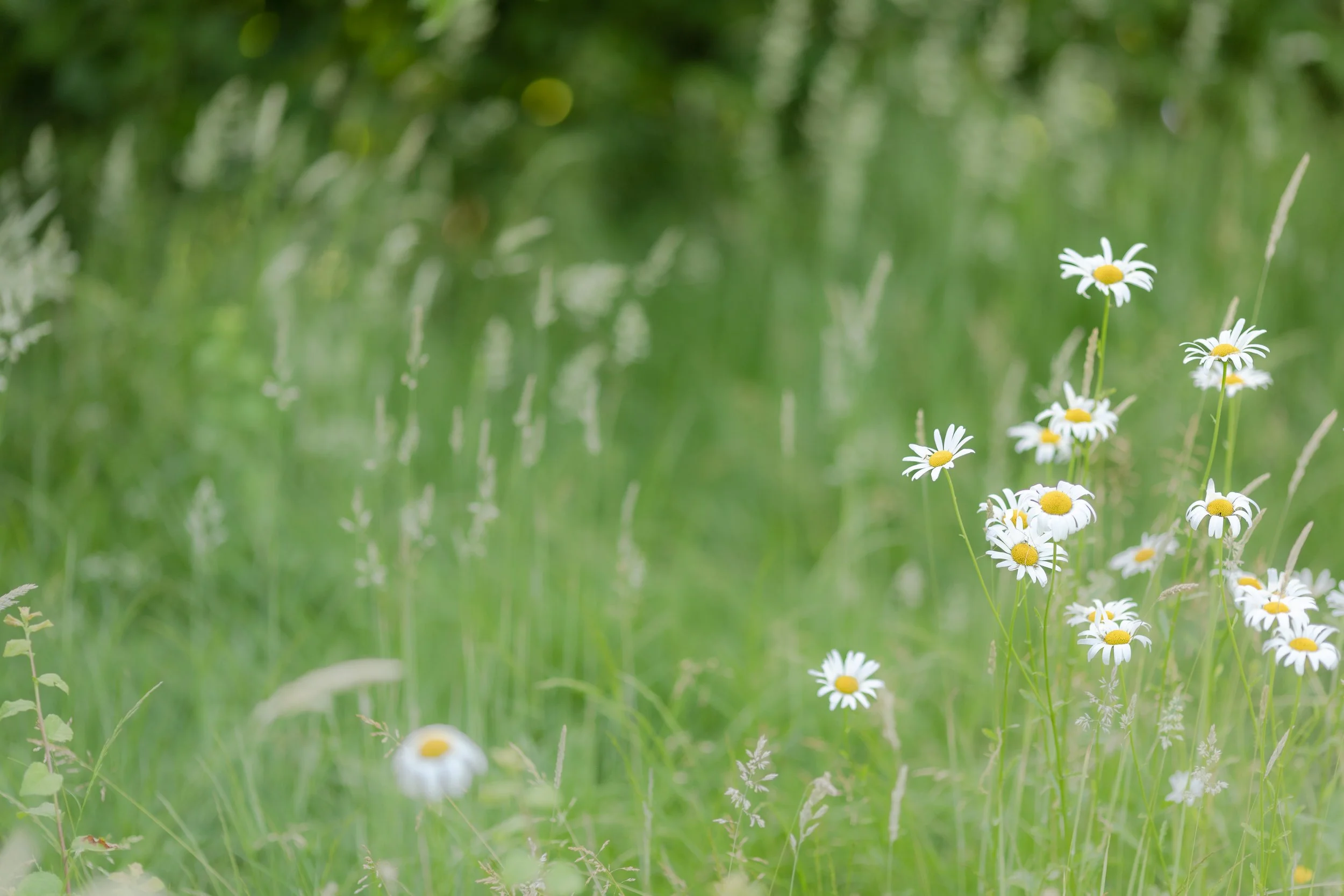
Set among rolling farmland, this country cottage garden takes the familiar language of the English cottage garden and recasts it in a more contemporary form.
Formal structure gives the garden clarity, while curving lines, generous planting and looser, wilder areas bring movement and romance. The intention is not to recreate a traditional garden, but to preserve its sense of abundance, intimacy and pleasure in a way that feels natural to the house and its setting.
Sevenoaks, Kent - Private garden - Completed 2024 - Photography by Georgina Edwards Photography




The Setting
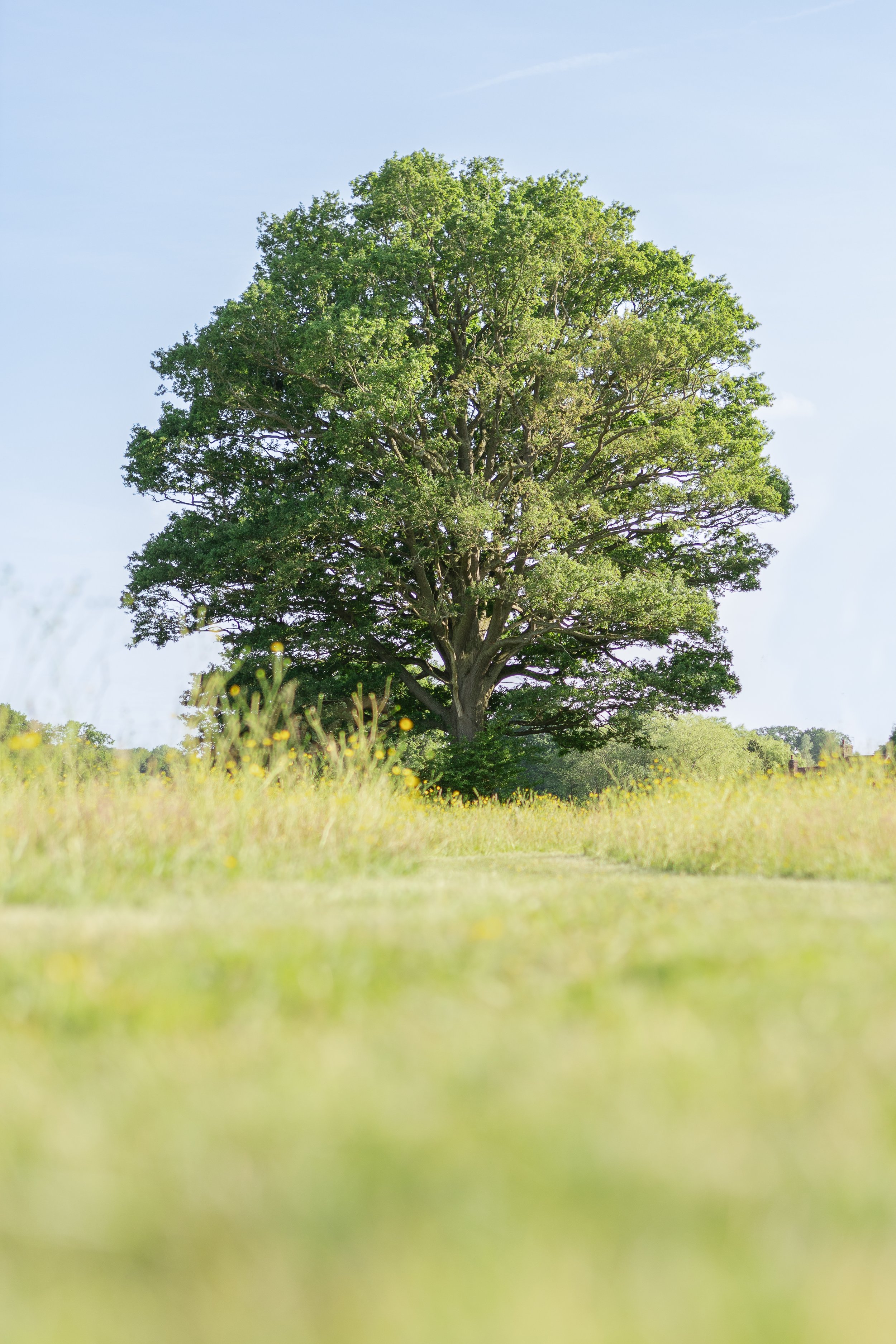
Set within the rolling farmland of the Weald of Kent, the garden opens directly onto meadow and the wider landscape beyond. Rather than drawing a hard boundary between garden and field, the design allows one to dissolve gradually into the other.
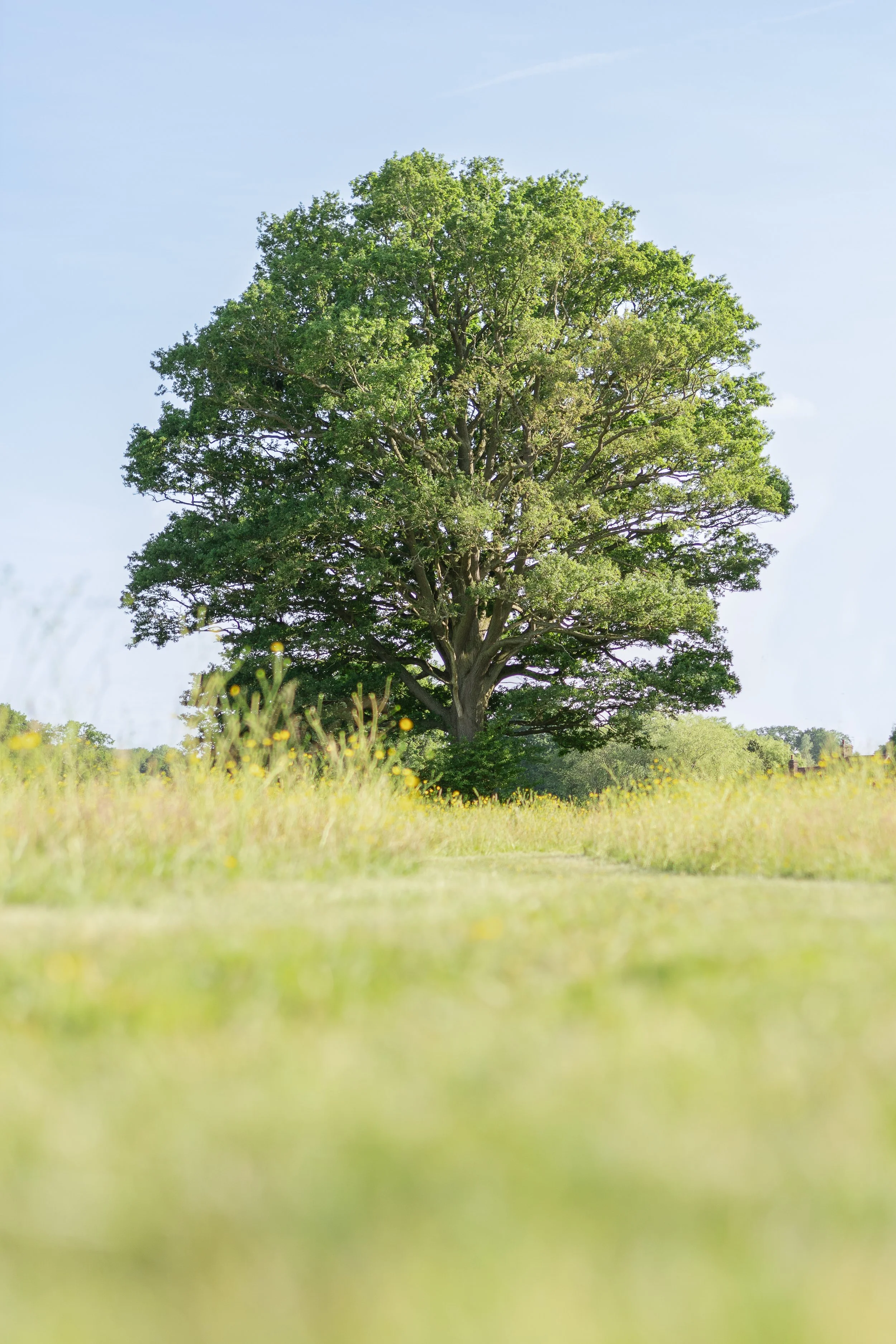
Existing mature oaks became important points of orientation. Paths, views and places to pause are arranged around them, using their trunks and canopies to frame longer views into the surrounding countryside. The landscape beyond is deliberately borrowed into the composition, giving the garden a sense of greater depth while keeping its rural setting constantly present.
Places for People
The garden is organised around simple destinations: places that give people a reason to stop, sit, wander or linger.
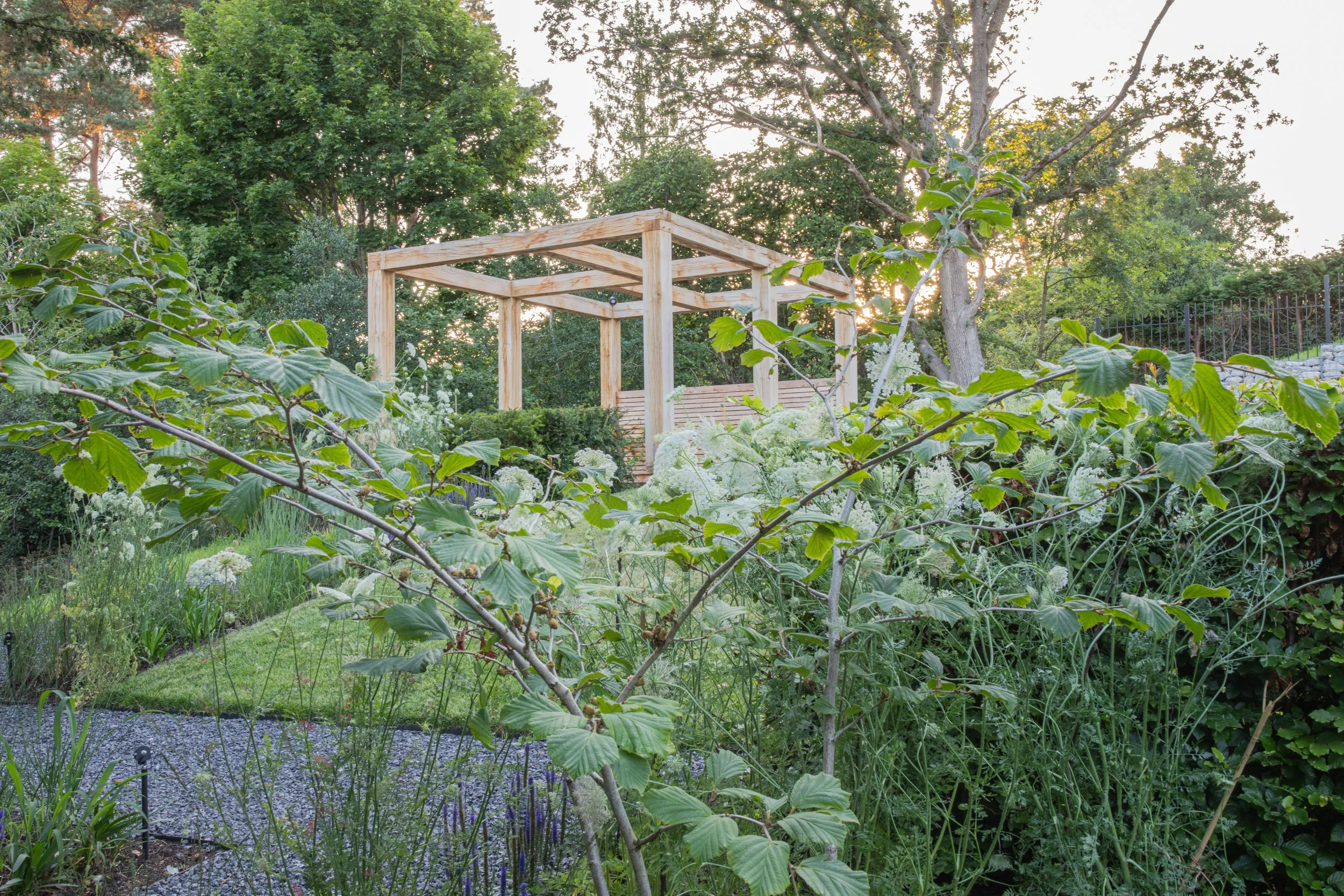
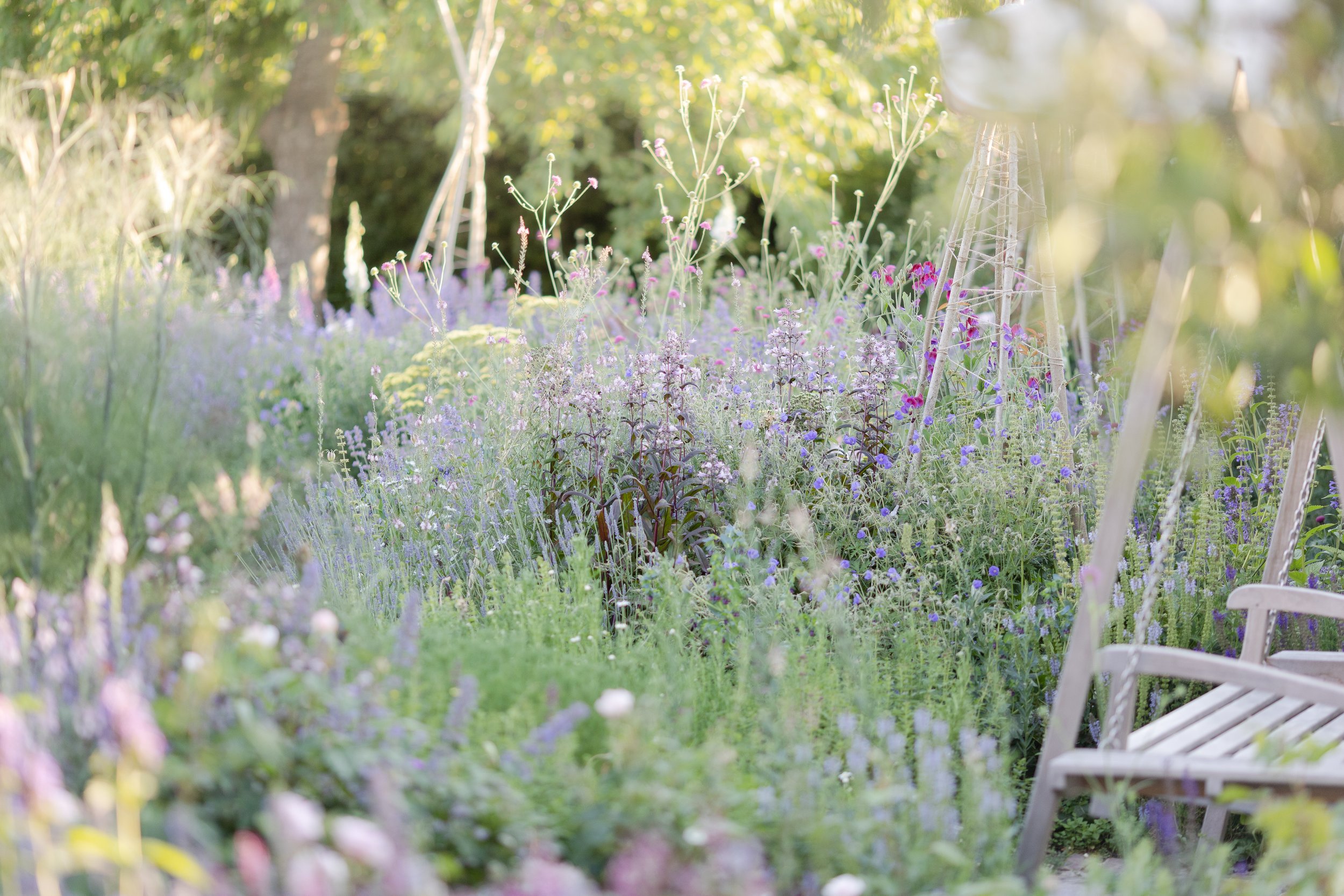
A small seating area is immersed in planting rather than set apart from it. Beneath one of the great oaks, a rope swing turns an existing tree into a place of occupation and memory. Elsewhere, meandering paths divide and fragment as they move out towards the meadow, making the journey through the garden less prescribed and encouraging exploration.
These are modest interventions, but they give the garden much of its life. The landscape is not only something to look at; it is somewhere to disappear into, pause within and return to.

The Planting
The planting draws on the familiarity of the English cottage garden, but avoids becoming a period exercise.
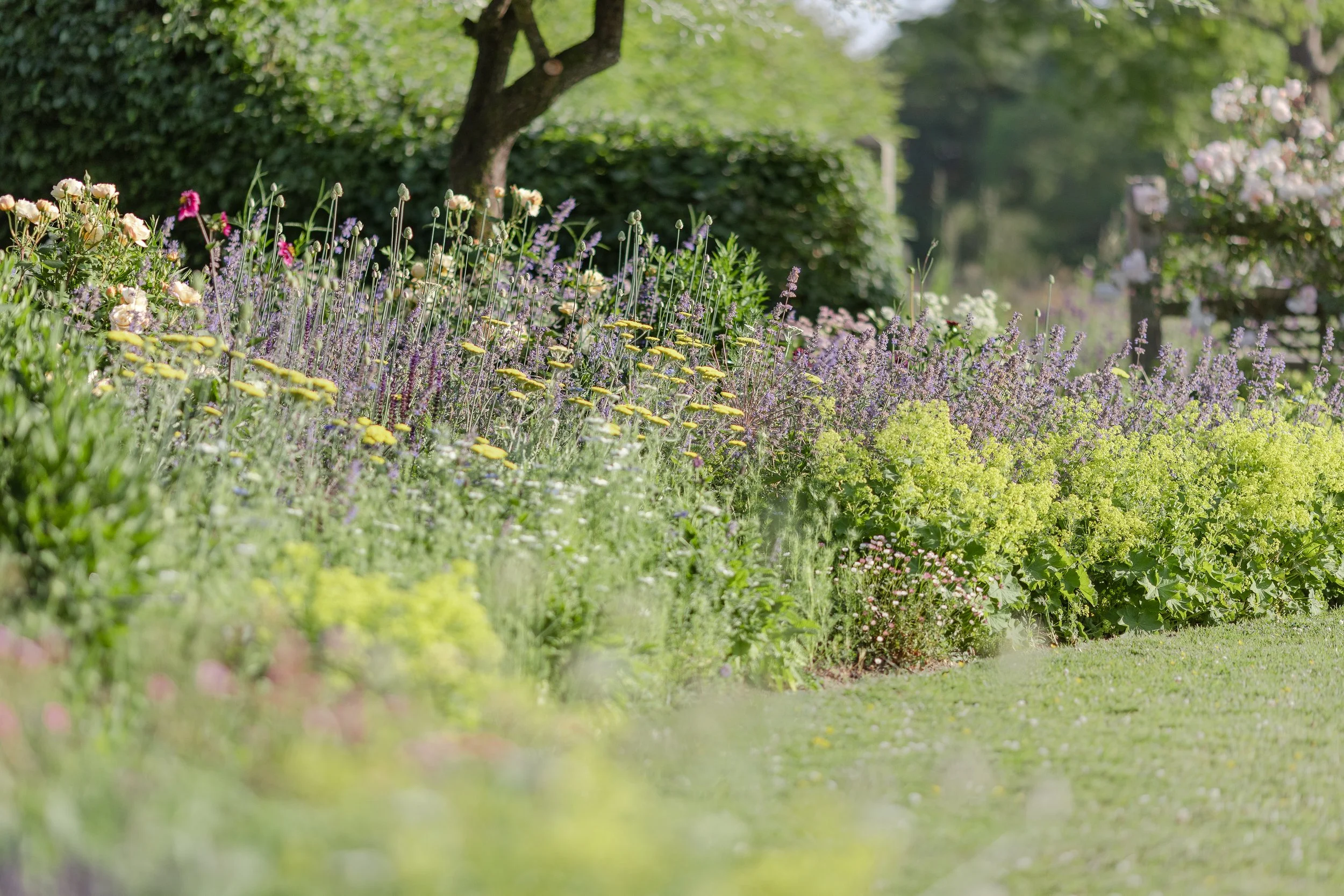
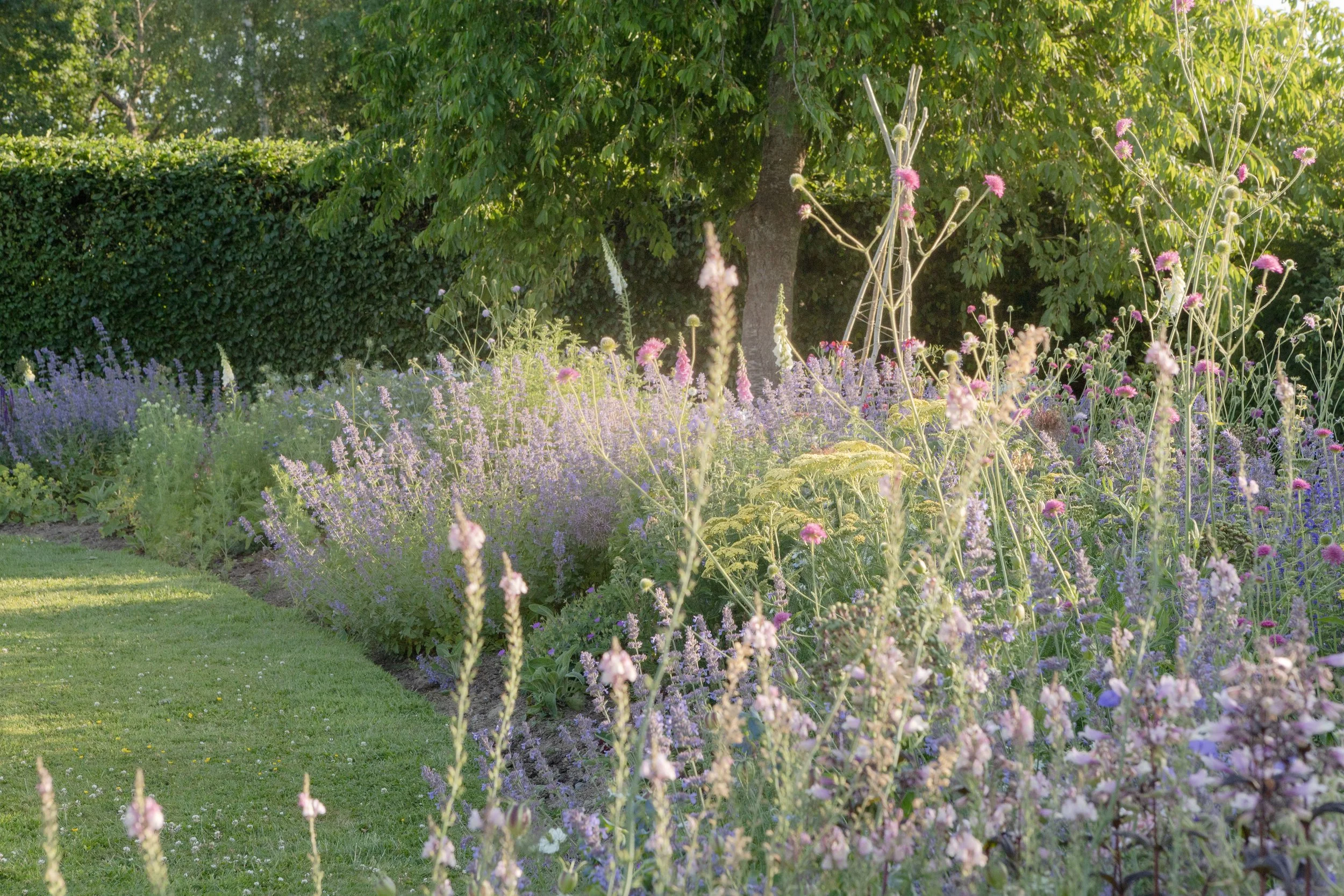
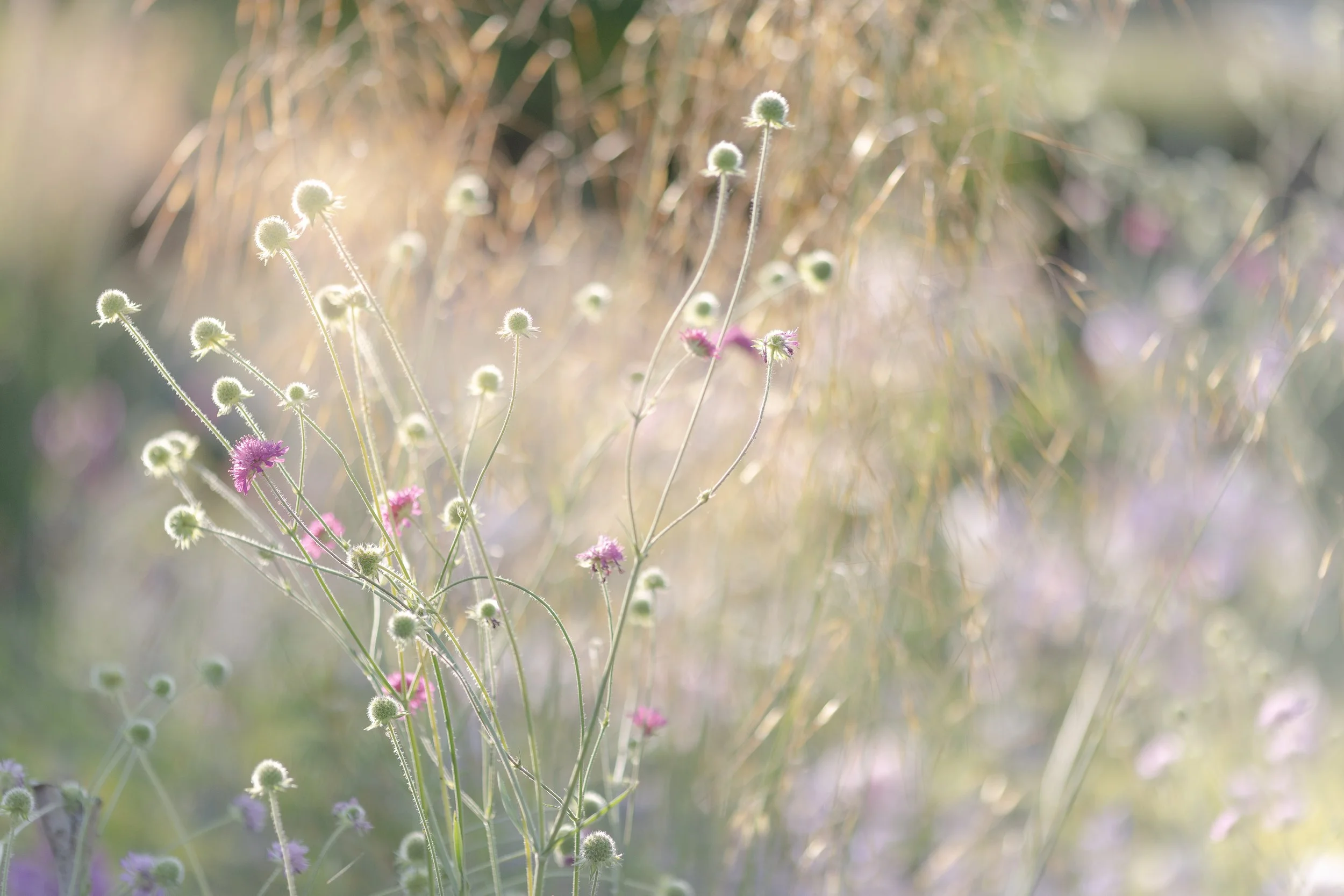
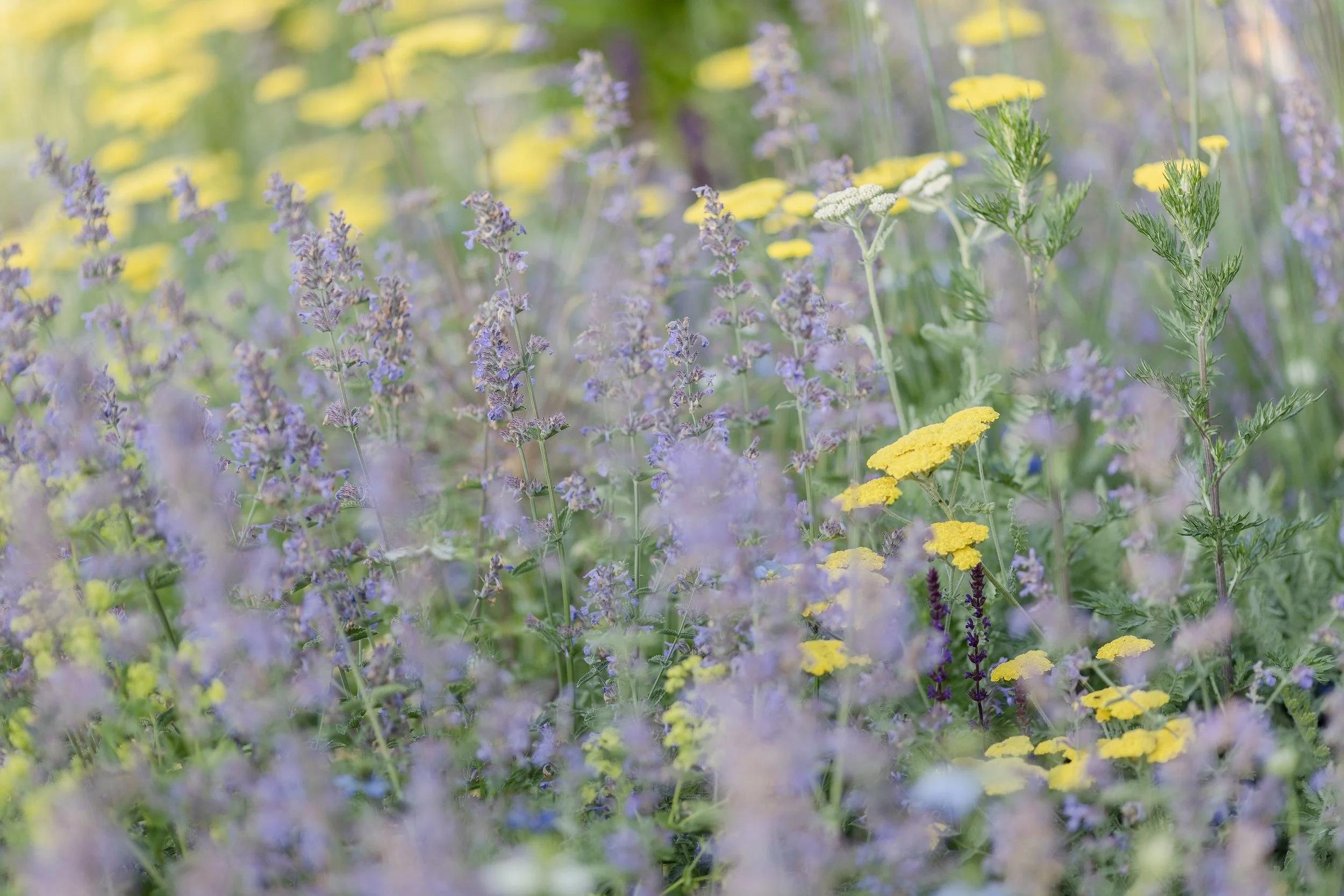
Nepeta, Alchemilla and roses bring softness, scent and seasonal abundance, while ornamental grasses, Parrotia persica and Hylotelephium introduce a looser, more contemporary rhythm. More formal English garden motifs provide structure within this informality, giving the planting enough order to hold its shape through the seasons.
At the edges, the planting becomes quieter and more naturalistic, helping the garden bind into the meadow and native vegetation beyond. The intention is for cultivated and wild planting to feel related rather than separate — a garden that belongs to the surrounding landscape rather than sitting apart from it.
The Design Story - how does strong design respond to a difficult soil?
The planting began with a simple premise: the garden could not be designed independently of the ground beneath it. The heavy clay of the Weald was not treated as a technical problem to solve after the design was complete. It became part of the design brief itself — shaping where plants could succeed, how different areas of the garden might behave, and which kinds of planting would feel convincing in this particular place.
Observation came first. Existing plants on site, together with what was flourishing in other notable gardens on similar soils, provided a practical vocabulary to work from. The aim was to build on evidence already present in the landscape rather than impose a scheme disconnected from it.
That evidence was then read more closely. Soil conditions changed across the garden according to slope, drainage, compaction and the presence of organic matter, creating different opportunities within the same site.
The soil was improved where necessary, but not disguised. Over time, the planting has continued to be tested and refined in response to what the garden reveals.
The result is a planting design inseparable from its site — shaped by the realities of the ground, and strengthened by the focus those realities demanded.

Planting choices grew from those differences. Species were selected not simply because they could survive clay, but because they could thrive in it and contribute to the wider character of the garden. The constraint became useful: narrowing the palette created greater discipline, stronger repetition and a more coherent relationship between the plants that remained.