
What medieval abbey gardens can teach us about resilience, self-sufficiency and the pleasures of a well-designed landscape.
The end of the world appears to have become an unexpectedly popular consideration in the English country garden.
In certain circles, conversations that once revolved around swimming pools and wine cellars have taken a more apocalyptic turn. Battery storage, water filtration, food security and the possibility of living off-grid are suddenly subjects of considerable interest.
Recent warnings from Defence Secretary Wes Streeting, alongside the Government's new Be Ready campaign, have clearly struck a nerve. Add artificial intelligence, energy insecurity, climate change and an unsettled geopolitical landscape, and it isn't particularly surprising that people are asking how they might become less dependent on the systems around them.
I have been interested in this subject for years, and I observe the sudden enthusiasm for 'prepping' with a mixture of fascination and amusement. Not because preparedness is foolish. Quite the opposite. What interests me is the rather scattergun nature of some of the responses. A greenhouse here, a generator there, perhaps some chickens and a rather ambitious vegetable patch. A collection of solutions in search of a coherent plan.
For me, as a garden designer, there are a few fundamental principles worth considering.
A garden has value well beyond its ornamental qualities. It can deepen our relationship with nature, bring people together, support healthy and resilient communities and, when needed, provide some of the necessities of life. But a productive garden must be understood as a long-term system. It should be manageable, capable of expanding or contracting according to need, and properly integrated into the wider landscape.
And above all, it should be beautiful. After all, if the end isn't quite as nigh as expected, it would be a shame to be left looking at a garden designed entirely around the prospect of catastrophe.
Lessons from the monastery
For a useful starting point, I find myself looking back to the gardens and productive landscapes of medieval abbeys.
Benedictine and Cistercian communities were hardly strangers to uncertainty. Their landscapes were expected to work: growing food and medicinal plants, managing water, supplying materials and offering spaces for contemplation. Brewing and winemaking had their place too; the monks were not entirely indifferent to life's pleasures.
The sixth-century Rule of St Benedict called for water, a mill, a garden and workshops within the monastic enclosure wherever possible. There is something strikingly modern about this approach. The landscape was not an ornamental addition to the buildings, but part of the infrastructure that allowed the community to function.
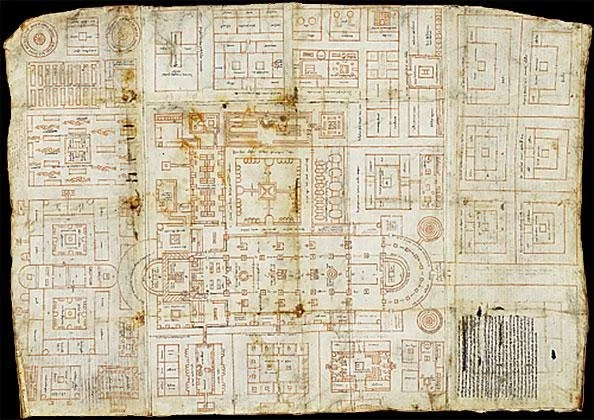
The remarkable ninth-century Plan of St Gall, preserved in Switzerland, illustrates this principle particularly well. Conceived as an ideal monastery rather than a record of a particular built site, it sets out distinct spaces for vegetables, medicinal plants and an orchard, alongside workshops, buildings and other necessities of everyday life. Here, the garden was part of the architecture of living.
Something of that legacy remains visible at Westminster Abbey's College Garden, where land has been cultivated for more than 900 years. Meanwhile, at Quarr Abbey on the Isle of Wight, an active Benedictine community continues the tradition, cultivating productive gardens and an extensive orchard.
Of course, medieval abbeys were not entirely self-sufficient utopias. They relied on substantial landholdings, labour and trade. What interests me is the coherence of their thinking, and particularly their ability to reconcile practical necessity with beauty, order and a sense of sanctuary.
A landscape conceived as a system
This is where I think the lessons become relevant to contemporary design.
Rather than collecting features associated with self-sufficiency, we should begin by understanding the opportunities of the site. Its landform, soils, orientation, water, existing vegetation and surrounding landscape. From there, we can develop a strong visual language and a practical system that works with these conditions.
A productive landscape might contain a kitchen garden, orchard, nuttery, woodland, water storage and facilities for composting and cultivation. But these shouldn't feel like unrelated departments of a small agricultural business. Each should have a place within the composition, with a practical purpose and a reason for being there.
Shelter and sanctuary
One of the most powerful lessons of the monastic garden is the value of enclosure.
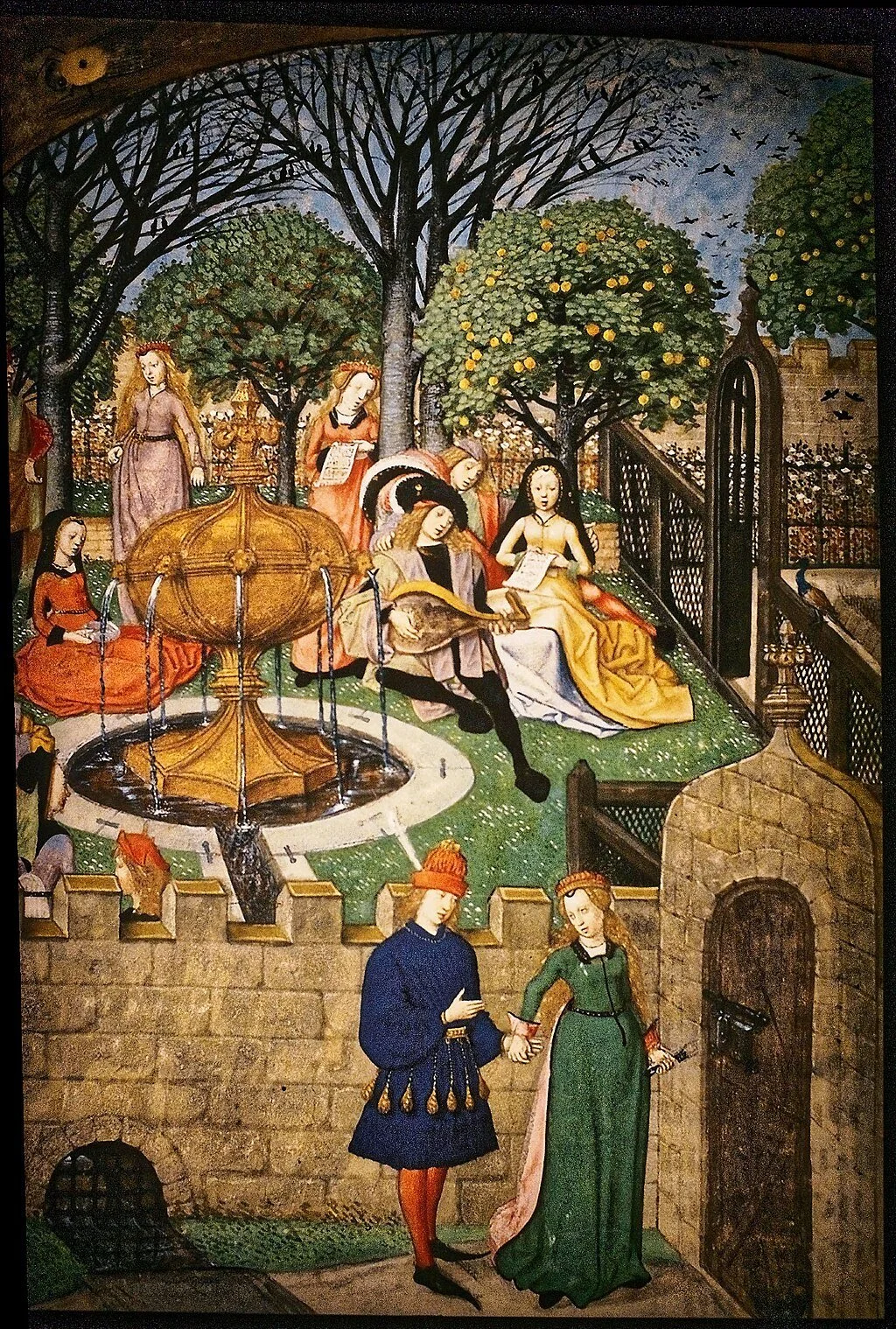
The hortus conclusus, or enclosed garden, held profound religious symbolism, but it was also an intimate, sheltered space, separated from the wider world. At Mount Grace Priory in North Yorkshire, individual Carthusian monks tended small gardens within their enclosed cells. Archaeological evidence has informed the garden displayed there today, revealing spaces that accommodated practical cultivation alongside contemplation.
I find this relationship between shelter, intimacy and utility particularly interesting. In contemporary gardens, that might mean a traditional walled garden, but equally a productive clearing within woodland, an enclosed garden room, or a naturally sheltered valley where the landscape provides its own sense of protection.
These places can create useful microclimates for cultivation. More importantly, they offer a sense of refuge. A garden that makes us feel sheltered from the wider world has considerable value, even when there is nothing particularly threatening about the world outside.
The kitchen garden
The kitchen garden is perhaps the most obvious expression of productive gardening, but I think it deserves much more imaginative treatment than it often receives. It should be a beautiful space in its own right, with an architectural relationship to the house and wider garden.
At a country garden I have been designing near St Albans, for example, I have used circular raised metal beds to create a strong geometric composition. They offer practical growing space, but their form also gives the garden a distinct personality.
Crucially, the arrangement is intended to be scalable. Cultivation can increase or decrease with the family's interests, time and needs, without leaving an abandoned agricultural landscape when enthusiasm inevitably turns elsewhere.
The productive beds are only one part of the picture. There must also be access, working space, composting, tool storage, irrigation and somewhere sensible to propagate and protect crops. A greenhouse, cold frames or polytunnel can extend the growing season, but their position needs to be considered alongside sunlight, shelter, servicing and visual impact.
Soil health is fundamental. Good compost, organic matter, mulching and appropriate crop rotations can be more valuable over time than an impressive collection of expensive equipment.
And, perhaps most importantly, there is knowledge. Growing meaningful quantities of food requires skill, time and attention. A productive garden is not necessarily a low-maintenance garden, and no amount of beautifully detailed raised beds will compensate for the absence of someone who knows how to use them.
I recently met the team behind Worthy Earth, a social enterprise working with landowners and communities to establish regenerative market gardens. Their approach to organic growing, soil health, education and local food production is a contemporary expression of the principles I find interesting in monastic landscapes. It is also a reminder that productive gardening need not be a solitary pursuit.
Orchards, nutteries and the wider landscape
The orchard has become a recurring feature in my country garden designs. I particularly enjoy establishing fruit trees within a wildflower meadow, allowing the orchard to feel like a natural extension of the wider landscape rather than a formal plantation.
There is considerable practical intelligence behind its apparent simplicity. A carefully chosen mixture of apples, pears, plums, damsons, cherries and perhaps quinces or medlars can provide a varied harvest over a long season. The selection should consider early and late cultivars, fruit for storage, compatible pollination partners, different rootstocks and resistance to pests and disease. Bee hives are an obvious potential addition to this landscape.
There is also an opportunity to combine heritage varieties with more contemporary cultivars selected for reliability and changing climatic conditions. The underlying meadow can support insects, birds and other wildlife, while the space may, if properly planned, accommodate poultry or other appropriate uses in future.
A nuttery offers another intriguing possibility. Hazel, cobnuts and filberts make attractive productive planting, while walnuts and sweet chestnuts may suit larger gardens with the right conditions. Again, there is an aesthetic pleasure in this. The early catkins of hazel, the canopy of a walnut and the autumn harvest all contribute to the character of the garden, irrespective of how many nuts are eventually collected.
Historically, abbey landscapes also incorporated dovecotes, fishponds and spaces for livestock. These offered sources of food and useful by-products, but they also gave rise to some of the most distinctive architectural and landscape features of the period. I am not proposing that every country garden should acquire a carp pond and a dovecote. But for a larger estate there is an interesting design question here: could productive features be given architectural expression, rather than concealed as purely functional necessities?
The same principle extends to woodland. Existing hazel coppice, for example, can provide stakes, poles and other useful materials while creating varied habitat for wildlife. In larger landscapes, carefully planned mixed woodland might produce timber and fuel on a managed rotation, with species chosen according to the site's conditions and the challenges of a changing climate.
This is a long-term investment in the landscape, not something to be switched on in an emergency.
Water, the essential resource
The sophistication of medieval monastic water management remains particularly impressive. Today, water should be considered from the outset of a garden masterplan, rather than treated as a technical matter to resolve once the planting has been designed.
Rainwater harvesting, appropriate storage, soil improvement and efficient irrigation all deserve attention, particularly as we face a climate of increasingly uneven rainfall. Ponds, streams and lakes can also become valuable parts of a wider water-management strategy, provided they are designed for that purpose. They can contribute to habitat, cooling and the atmosphere of the garden, while engineered storage and collection systems help support cultivation through drier periods.
As with so many aspects of garden design, the most interesting solutions reconcile practical performance with an enriching experience of the landscape.
Life's pleasures
Of course, a life of self-sufficiency needn't be one of self-denial. The monastic traditions of brewing and winemaking suggest that there may be some rather enjoyable opportunities for the contemporary garden.
An orchard might be planted with a selection of cider apples, bringing the prospect of an autumn harvest and a few bottles of homemade cider. A sheltered south-facing wall, pergola or small vineyard could support vines selected for winemaking, while vigorous hop plants might clothe an otherwise unremarkable structure, their flowers providing the ingredients for home-brewed beer. With a little more imagination, even tobacco plants could find a place in the productive garden. Nicotiana tabacum can be grown in sheltered parts of Britain, although producing tobacco for smoking is a rather more complicated proposition, subject to strict regulation and obvious health considerations.
None of this happens without effort. Varieties must be selected, crops tended, and space provided for pressing, fermentation, equipment and storage. But these activities can also become part of the architecture and rituals of a country garden. I rather like the idea that a productive landscape might supply not just food for the table, but something for the glass, too. There is pleasure in the harvest, the making, the sharing and the anticipation of enjoying something grown on one's own land.
And perhaps that is another useful lesson from history. A resilient landscape should support not just life's necessities, but some of its pleasures as well.
The Good Life, whatever happens
All this has been much in my mind while developing the masterplan for a family country garden on the edge of St Albans in Hertfordshire - click here.
The brief was not to prepare for the collapse of civilisation. It was, rather more appealingly, to create something of The Good Life: a place for family life, play, entertaining, an appreciation of nature and the pleasures of growing things.
But many of the same principles apply.
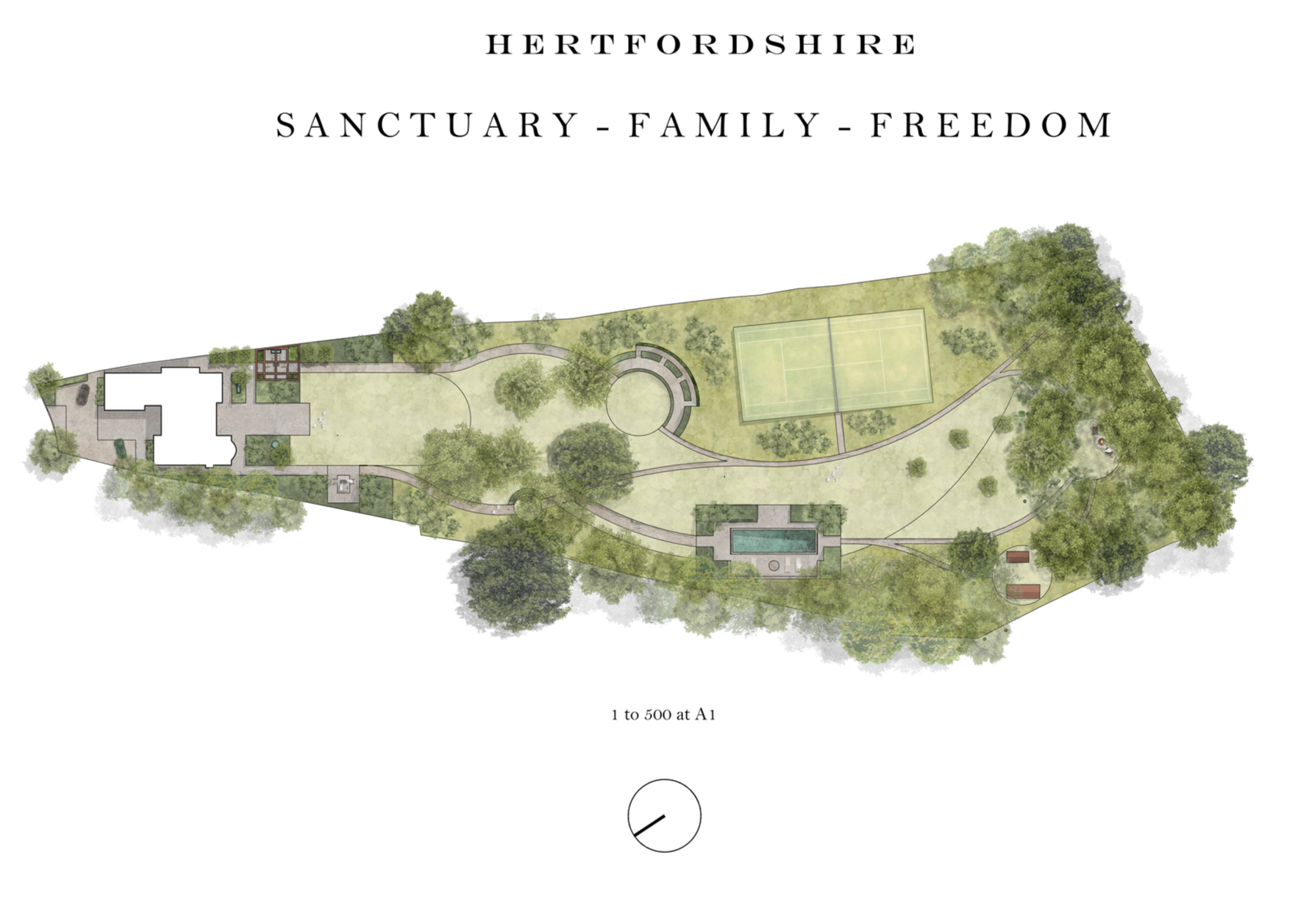
The kitchen garden is designed as a beautiful, legible composition, with the capacity for additional cultivation if needed. A foraging hedge introduces soft fruits into the wider landscape. An existing, overgrown orchard has helped shape a generous meadow-orchard setting, with space that could accommodate poultry in the future.
Existing woodland and stands of hazel and blackthorn are retained as part of the character of the site, with opportunities for appropriate long-term management. Sufficient working and storage space, composting areas and the practical requirements of maintaining a substantial garden have been incorporated into the planning.
Yet none of these features defines the garden on its own. There are places to gather, spaces for children, carefully framed views, immersive planting and quieter areas where the family can retreat from the demands of everyday life. The landscape has been designed to be enjoyed, to mature and to change alongside the people who live there.
And perhaps this is where the medieval example offers its most useful lesson. The strongest gardens were never simply collections of useful plants and productive structures. They were living places, shaped by a relationship between human needs, the natural world and the life of a community.
There is a distinction, too, between resilience and isolation. The ability to grow something is valuable. So is the ability to share it, to exchange knowledge, and to work alongside others. A garden can help cultivate those relationships as surely as it cultivates the soil. For me, that is a much more interesting response to an uncertain future than building a landscape around fear. The aim should be a garden that feeds us, shelters us, connects us to nature and to each other, and gives pleasure over many years.
If the worst never happens, the garden should still have been worth making.
References and further reading
Benedict of Nursia (c. sixth century) The Rule of Benedict, Chapter 66: ‘The Porter of the Monastery’. English translation. Available at: https://pressbooks.palni.org/ruleofbenedict/chapter/rb-66/ (Accessed: 6 November 2026).
Cabinet Office (2026) ‘Households encouraged to take small, simple steps to stay prepared in an emergency’. GOV.UK, 22 October. Available at: https://www.gov.uk/government/news/households-encouraged-to-take-small-simple-steps-to-stay-prepared-in-an-emergency (Accessed: 6 November 2026).
English Heritage (2017) ‘How to garden like a medieval monk’. English Heritage, 7 April. Available at: https://www.english-heritage.org.uk/visit/inspire-me/blog/blog-posts/how-to-garden-like-a-medieval-monk/ (Accessed: 6 November 2026).
Historic England (n.d.) ‘Rievaulx Abbey Cistercian monastery: inner and outer precinct, water-management works, agricultural features, enclosures and ancillary buildings’. National Heritage List for England, List Entry 1012065. Available at: https://historicengland.org.uk/listing/the-list/list-entry/1012065 (Accessed: 6 November 2026).
Quarr Abbey (n.d.) ‘Grown at Quarr’. Quarr Abbey. Available at: https://quarrabbey.org/visit/gardens-and-grounds/grown-at-quarr/ (Accessed: 6 November 2026).
Stiftsbezirk St. Gallen (n.d.) ‘The Miracle of Transmission – The Plan of St Gall and Europe in the Early Middle Ages’. Exhibition Space, Abbey of St Gall. Available at: https://stiftsbezirk.ch/en/current-exhibitions/exhibition-space (Accessed: 6 November 2026).
Westminster Abbey (n.d.) ‘Abbey gardens’. Westminster Abbey. Available at: https://www.westminster-abbey.org/history/explore-our-history/abbey-gardens (Accessed: 6 November 2026).
Worthy Earth (n.d.) ‘Creators of flourishing kitchen gardens, designed for the future’. Worthy Earth. Available at: https://worthy-earth.co.uk/ (Accessed: 6 November 2026).
